

OVERVIEW
Integration is not just connectivity, it is workflow accuracy
Many integration projects connect an interface, but fall short when workflow details matter, such as how orders, referrals, attachments, and statuses need to map across sites, configurations, and vendor constraints. That is where partial writeback, inconsistent visibility, and manual reconciliation show up.
This is also where generalist integration vendors and manual outsourcing models break down. A connector alone does not solve for healthcare workflow nuance, and manual work inside portals or EHR screens can move tasks forward while leaving the system of record out of sync. Infinx brings dedicated healthcare integration expertise, and designs integrations around patient access and revenue cycle workflows, so teams can stay in their primary system with fewer handoffs and less rework.

MANAGED SERVICE
Managed integration assurance that keeps your system of record current
Go live is not the finish line. Interfaces drift, vendor capabilities vary, and writebacks can fail silently. As part of the Infinx Healthcare Revenue Operating System, our team actively monitors integration health, validates that updates are posting as expected, and helps resolve exceptions so provider systems stay current and teams can trust what they see in the system of record.
We start with discovery and mapping to understand your systems, interface access, and the workflows you want supported. Then we recommend the simplest path to go live, along with a clear next step if you want to expand into deeper writeback over time.
INTEGRATION OPTIONS
Multiple ways to connect, designed to reduce IT lift
We support several proven integration paths, so you can align to your environment, interface access, and operational goals. These options let you start quickly and scale into deeper integration as needs evolve.
API with webhooks or scheduled polling, depending on what the vendor supports, for bi-directional exchange and timely updates
HL7 for common provider system connectivity and workflow triggers
FHIR ready patterns for environments that support FHIR, especially for clinical data exchange, with HL7 and X12 used where those are the supported pathways
Secure file exchange for structured data transfer when interfaces are limited
RPA for legacy workflows when traditional interfaces are not feasible
SYSTEMS WE COMMONLY SEE
Expertise with common provider systems
We work with a wide range of EHR, EMR, PMS, LIS, and RIS platforms, so teams can keep work in their primary system while we support connected workflows behind the scenes. Support varies by workflow and interface availability, and some systems require custom interface work.
Examples we commonly see include:
Advanced Data Systems Corporation (ADS)
Allscripts
athenahealth
Cerner
Centricity EMR
DrChrono
eClinicalWorks
Epic
eRad
Exa
Exemplar LIMS
Imagine
Konica Minolta
MedicsPremier
Merge
ModMed
NextGen
Open Doctor
PX Technology
Raintree
Royal
Salesforce
ScriptSender
Surgimate
Synapse EIS
Greenway
Urochart
If you do not see your system listed, we can still confirm compatibility and recommend the best path based on your environment and integration requirements.
WHAT INTEGRATIONS ENABLE
One integration layer that supports multiple workflows
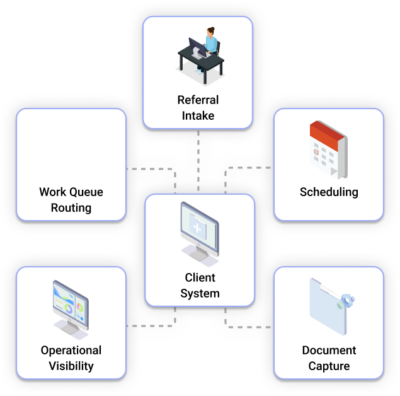
Provider system integrations should not be tied to a single use case. Our integrations are designed to support a broad set of operational workflows, while keeping the source of truth in your EHR, RIS, or PM system.
- Referral and order intake, including documents and attachments
- Scheduling coordination and worklist creation
- Document capture and data normalization to reduce manual entry and rework
- Work queue routing and task status updates across teams and sites
- Operational visibility with standardized outcomes written back to the system of record
This approach reduces handoffs and keeps work moving without forcing a system change.
DATA FLOW
What can flow between your system and Infinx
Data exchange varies by system and integration method, but most provider environments focus on two-way flow that reduces duplicate entry and improves visibility.
Inbound, what we can ingest
We capture the data needed to create, route, and progress work, based on what your system can send.
- Patient demographics and contact details
- Provider, location, and scheduling context
- Order details and structured fields needed for downstream workflows
- Documents and attachments tied to the patient or order
These inputs help create consistent, trackable work items without extra manual setup.
Outbound, what can be written back
Where your system supports it, we return the updates your teams need to stay in their native workflow.
- Status updates and workflow milestones
- Outcomes and completion markers
- Notes or internal flags when supported by your system configuration
- Missing information indicators to reduce back-and-forth
Writeback support varies by system. Some environments support final outcomes only, and attachments and interim milestones may be limited. These updates help teams see progress in the system of record instead of chasing updates across tools.
IMPLEMENTATION
Set expectations early, then go live with confidence
Every environment has nuances, so we start with discovery and mapping to confirm what your systems can send, what you want written back, and recommend the fastest path to go live, based on your timeline and operational goals.
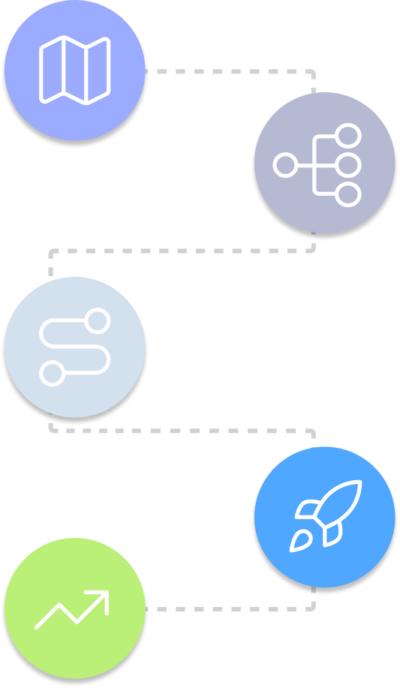
- Workflow alignment and field mapping
- Integration path recommendation and rollout plan
- Build and test in non-production environments
- UAT and go-live support
- Post-launch tuning for accuracy and adoption
The result is a realistic integration plan and a rollout that fits your timeline and operational reality.
Faq
Answers to common questions about EHR integration
Here are the questions we hear most often when teams are evaluating how we will connect to their EHR, EMR, PMS, LIS, or RIS environment.

INTEGRATION AT A GLANCE
Integration methods and data flow
These are the most common integration approaches and data flow patterns used to connect Infinx to provider systems.
- Methods supported: API, HL7, secure file exchange (batch/SFTP), RPA
- FHIR: FHIR-ready patterns in environments that support FHIR; HL7/X12 used where supported
- Writeback: bi-directional exchange where the system supports writeback; writeback varies by system and configuration
- Typical data flow: inbound demographics, order details, documents; outbound statuses, milestones, outcomes, missing info indicators
Share your EHR and timeline, and we will outline a practical integration plan.